

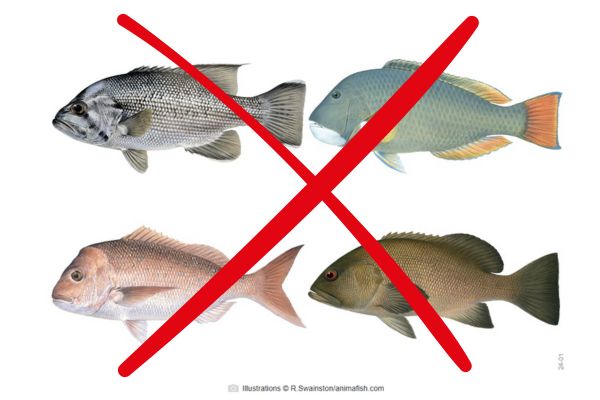
As of 1 January, commercial demersal fishing along Western Australia’s West Coast has officially stopped. What was once framed as a future policy is now a reality – and its impact is already being felt far beyond the boats tied up at the jetty.
Earlier this week, outside Fins Seafood in Bicton, a handwritten sign stopped people in their tracks:
“LAST CHANCE for WA Dhufish.”
It was a quiet, heartbreaking moment – not loud protest or political theatre, just a simple truth. A fish that has defined our coastline, our cooking and our sense of place is disappearing from local counters. And with it, so much more.
No one disputes the need to protect fish stocks. Sustainable fishing matters. Healthy oceans matter. But sustainability does not exist in a vacuum; it must include people, livelihoods, food systems and transparency. And this decision has failed on all four.
Commercial demersal fishing has been part of WA’s coastal food system for generations. Fishers paid licence fees, followed changing rules, reduced catches when asked, and were repeatedly encouraged to “do the right thing” and supply local, traceable seafood to WA communities. Many now say they were not genuinely consulted, their local knowledge dismissed, and the final decision delivered with little warning – wiping out businesses, family incomes and regional supply chains overnight.
At the same time, the government is proceeding with (or actively planning) large-scale industrial infrastructure in or near sensitive marine environments. Cockburn Sound, one of the most important spawning areas for demersal species like pink snapper, continues to face pressure from defence expansion, port planning and dredging proposals. Offshore, oil and gas developments continue near ecologically significant waters off the North West, including near Exmouth.
This is where the contradiction becomes impossible to ignore.
If demersal fish are so vulnerable that fishing must cease completely, how can industrial activity proceed in known breeding and nursery areas? Why are fishers bearing the full burden of “conservation” while other pressures continue? Sustainability cannot mean removing food producers while tolerating impacts that affect the same ecosystems.
The implications for food security should alarm every Western Australian.
With local demersal supply gone, we face:
-
Less fresh, local fish available to households and restaurants
-
Increased reliance on imported seafood with unknown environmental and ethical standards
-
Higher prices and reduced choice
-
The permanent loss of skills, boats and regional supply chains that cannot simply be rebuilt
Once local fishing capacity disappears, it doesn’t quietly return.
This did not need to be a total ban. There was room for compromise – reduced quotas, seasonal closures, spatial management, co-designed recovery plans and meaningful inclusion of fisher knowledge. Other regions recover fish stocks with fishers, not by eliminating them.
Western Australia has one of the longest coastlines on Earth. The idea that we cannot protect fish stocks without destroying a sustainable local food industry, while still finding room for ports, defence infrastructure and energy projects in sensitive areas, defies common sense.
That sign in Bicton said it all. You don’t know what you’ve got until it’s gone.
There is a petition calling for a fairer, more democratic approach to fisheries management, one that protects fish and people. If you care about local food, transparency and WA’s ability to feed itself responsibly, now is the time to act.